Welcome to the modern customer journey – where logic sometimes seems to disappear and confusion reigns supreme.
I used to think customers were just being difficult. Turns out, they’re not trying to drive us crazy (well, mostly). They’re just living their lives in a world where they have countless options competing for their attention.
Here’s what matters: one poor experience can be enough to push a customer toward another option, while customers who feel understood and supported may be more likely to stay engaged. Understanding your customer’s journey isn’t just nice to have – it can play an important role in creating better customer experiences.
So how do you crack the code? How do you figure out what your customers are actually doing when they’re not buying from you? One increasingly useful tool is artificial intelligence. And before you roll your eyes and think “great, another AI article,” hear me out.
AI isn’t just some fancy tech buzzword. Think of it as a tool that can analyze large amounts of customer data and spot patterns that would be difficult to identify manually. Let me show you how businesses can use it to better understand and serve their customers.
The Great Customer Journey Mystery: Why Everything Changed
Despite recognizing AI as a strategic priority, many businesses are still figuring out how to use AI effectively to enhance personalization and customer experience.
How AI Becomes Your Customer Journey Detective
Think of AI as that friend who notices everything – the one who remembers that you always order extra cheese when you’re stressed.
AI can do something similar with customer data, analyzing large numbers of interactions and identifying patterns across them.
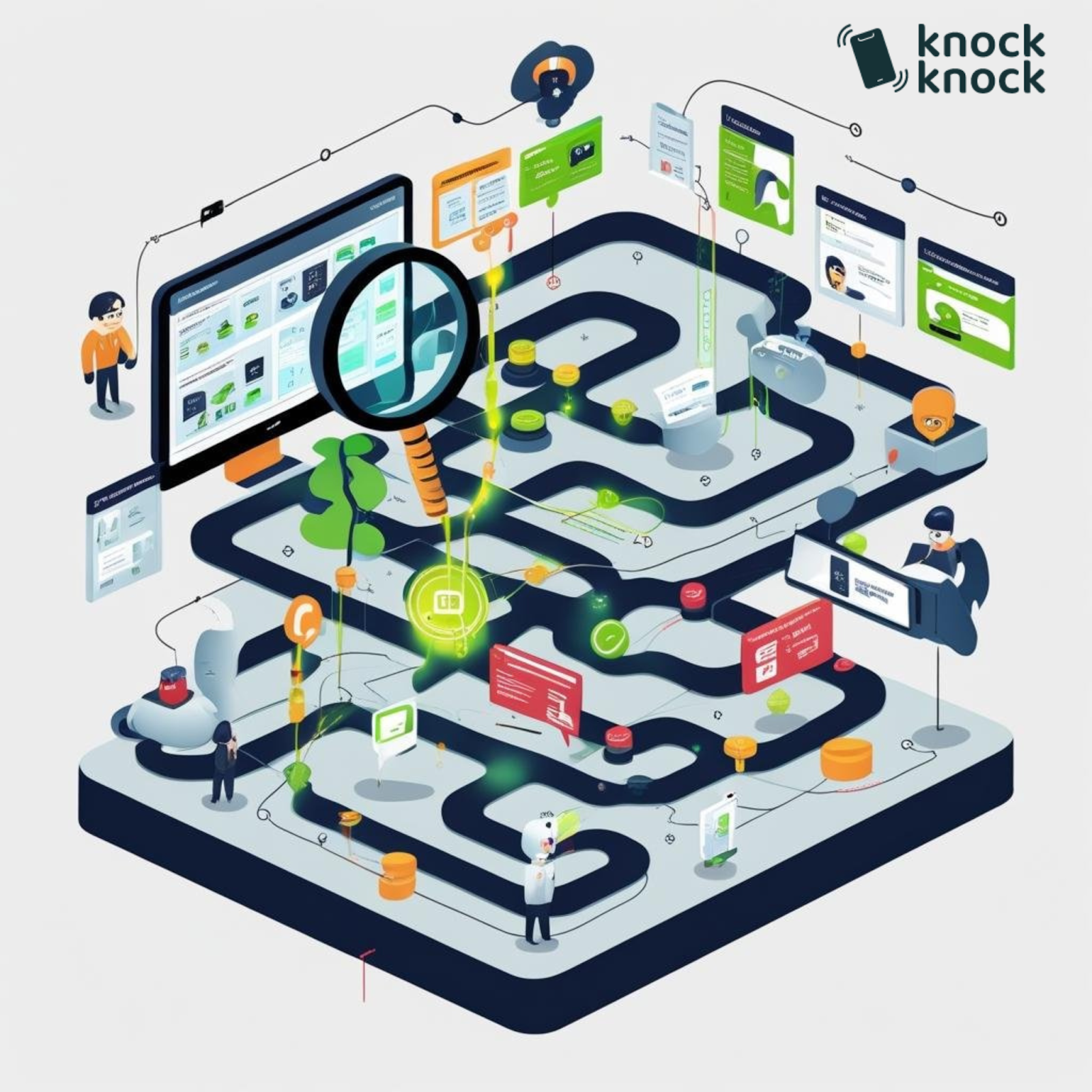
The Magic of Pattern Recognition
AI can dig through large amounts of customer data like a digital archaeologist, uncovering patterns that might otherwise be difficult to spot. Depending on the data available, it can help you understand:
- Which interactions are associated with sales
- Where customers encounter friction and leave
- Which moments appear to create stronger engagement
- How different touchpoints may influence each other
For example, your analytics might reveal that customers who watch a “how-to” video before talking to sales convert at a higher rate than those who don’t. If the pattern holds up across enough data, that insight can help you decide where to invest more attention.
The Personal Touch at Scale
Here’s where it gets really useful. Once AI identifies meaningful patterns and customer signals, it can help businesses create more relevant interactions across larger audiences.

AI can be a useful tool for enhancing customer engagement by supporting personalized offers and using data analysis to inform more targeted promotions.
This might look like:
- Showing products that match what someone’s been browsing
- Sending helpful content that answers their specific questions
- Offering assistance at relevant moments
- Remembering preferences across supported channels
Decoding Customer Behavior: What Your Data is Really Telling You
In 2026, businesses aren’t necessarily struggling to collect data – many are struggling to turn it into something useful. It’s like having a library with millions of books but no card catalog. The information is there, but good luck finding what you need.
The Data Goldmine
The value comes from connecting information across relevant data sources and turning it into insights that can actually inform decisions.

Your customers may be leaving useful signals across different touchpoints:
- What they click on your website
- How they interact with your emails
- Which social media posts they engage with
- What they search for before finding you, where that data is available
- When they tend to make purchases
Predicting the Future (Sort Of)
One of the most interesting things AI can do is estimate what customers might do next. It’s not magic – it’s pattern recognition based on available data.

Depending on the system, data quality, and use case, AI can help estimate:
- What products someone might want based on their browsing history
- Which customers may be showing signs of disengagement
- How changes to parts of the customer journey affect behavior
- Which customers show characteristics associated with stronger advocacy or loyalty
For instance, your data might reveal that customers who make repeat purchases and then stop engaging for an extended period are more likely to churn. Armed with that insight, you can test targeted campaigns designed to re-engage them.
Beyond Demographics: Understanding Real Behavior
Traditional customer segmentation was like judging a book by its cover. Age, location, income – basic stuff that doesn’t tell you Traditional customer segmentation often relies heavily on characteristics such as age, location, or income. Those attributes can be useful, but they don’t always tell you how someone actually behaves.
AI can help you group or understand customers based on behavioral signals.
Insights into customer behaviors can help inform personalized messaging and strategic decisions, leading to more relevant engagement and a better understanding of customer needs.
For example:
- How they prefer to consume content
- What types of messages they respond to
- How price-sensitive their behavior appears to be
- Which channels they prefer for different types of interactions
It’s the difference between knowing someone is 35 years old and understanding that they tend to research extensively before buying, prefer video content over text, and respond more often through a particular channel.
The Support Sidekick: Delivering Help When (and How) Customers Need It Most
Imagine if every customer had a trusty sidekick – ready to provide the right answer, a relevant recommendation, or a helpful nudge when appropriate. That’s the potential of combining customer data, predictive analytics, and AI-powered tools to support customers throughout their journey.

Today’s customers often expect convenient support and relevant recommendations. By using customer feedback, analyzing available interactions, and tracking appropriate behavior across touchpoints, businesses can better understand customer needs and respond before unnecessary friction builds.
Let’s say a customer is browsing your site and hesitating over a product. With the right AI-powered support system, you can identify this pain point in real time based on configured signals and offer relevant information, a recommendation, or access to additional assistance.
Or maybe a customer leaves a less-than-glowing online review. By analyzing customer feedback and sentiment, your team can identify the issue and respond appropriately.
The real value comes from connecting the dots: using customer data to identify areas where customers struggle, then refining your marketing strategies and support processes based on what you learn.
By collecting and acting on customer feedback from relevant channels, you’re not just solving individual problems. You’re building a process for continuously improving the customer experience.
In short, the support sidekick isn’t just about putting out fires. It’s about recognizing customer needs, delivering appropriate help, and making interactions easier where possible.
Measuring Success: Beyond Vanity Metrics
Many businesses focus heavily on page views, email open rates, and social media likes. Those metrics can provide useful information, but they don’t always tell you whether the overall customer journey is working.
The Metrics That Actually Matter
In 2026, businesses can look beyond surface-level engagement and track metrics such as:
- Customer sentiment: How do customers feel at different touchpoints?
- Customer effort: How hard is it for customers to get what they need?
- Journey completion rates: How many people actually finish what they started?
- Long-term customer value: How do journey improvements relate to retention and lifetime value?
AI and analytics tools can help businesses analyze these metrics and build a broader picture of journey performance.

The Continuous Improvement Loop
The customer journey isn’t something you set up once and forget about. It needs ongoing evaluation and improvement, like a race car that’s regularly tuned based on performance.
AI can help by:
- Supporting tests across different journey paths
- Identifying emerging friction points in available data
- Suggesting improvements for different customer segments
- Measuring how changes relate to short-term conversions and longer-term customer behavior
The actual impact of AI-powered journey optimization varies by business, audience, implementation, and data quality. The important part is using measurable results to understand what is and isn’t working.
The Feedback Loop: Turning Customer Clues into Continuous Improvement
If your customers are leaving clues all over the place, the feedback loop is your secret decoder ring. It’s how you gather feedback, connect data, and turn customer interactions into opportunities to improve.

Think of the feedback loop as your business’s built-in GPS. By collecting customer feedback from surveys, focus groups, social media interactions, online reviews, support conversations, and other relevant sources, you can build a clearer picture of what’s working, what’s not, and where customers are hitting roadblocks.
But it’s not just about gathering data. It’s about using analytics and artificial intelligence to spot patterns, identify areas for improvement, and develop better responses to recurring customer needs.
Let’s say you notice a spike in support requests about a particular feature. By connecting data from customer support, social media, and product usage, you may be able to identify the pain point and improve support or training around it.
Or maybe your analytics tools reveal that customers are dropping off at a certain step in the journey. Now you have a specific area to investigate and improve.
The real value comes when you use these insights to refine your marketing strategies, enhance your products or services, and create more relevant experiences for your target audience.
By closing the loop – collecting feedback, analyzing it, acting on it, and measuring the outcome – you create a process of continuous improvement that can support customer satisfaction and long-term growth.
In a world where customer needs and expectations continue to evolve, a strong feedback loop can help businesses stay relevant and improve the experiences they provide.
So don’t just listen. Act, measure, learn, and adapt.
The Human Touch: Why AI Needs Heart
Before you start worrying that AI is going to replace all human interaction, here’s the important part: AI can be used to enhance human connections rather than simply replace them.
AI can be useful for analyzing data and identifying patterns, while people bring judgment, empathy, creativity, expertise, and problem-solving to interactions that benefit from a human touch.
The opportunity comes from combining the strengths of both.
Finding the Sweet Spot
A thoughtful customer journey can use AI to:
- Identify situations where human involvement may be valuable
- Ensure automation supports rather than replaces meaningful connections
- Free up people to focus on more complex or high-value interactions
- Provide teams with relevant context to help them respond effectively
For example, AI might handle routine questions and basic support issues, but when it detects signals of frustration or encounters a complex problem, the system can hand the conversation to a human agent with relevant context about the customer’s journey.
How Knock Knock App Makes This All Simple
Now, you might be thinking, “This all sounds great, but I’m not Google. I don’t have a team of data scientists and unlimited budget.”
That’s where Knock Knock App comes in.
Knock Knock is designed to make AI-powered customer engagement and journey intelligence more accessible without requiring businesses to build an entire AI infrastructure from scratch.

What Knock Knock Does
Knock Knock can help you:
- Identify critical moments: Use available signals to understand when website visitors may need help
- Understand behavior in real-time: See supported website activity as it happens
- Create connected experiences: Use available visitor and behavioral context to support relevant engagement
- Measure what matters: Analyze customer interactions and journey signals
Knock Knock focuses on helping businesses create relevant customer interactions rather than relying only on basic contact capture.
By using available context and behavioral signals to provide timely assistance, businesses can create more opportunities to engage visitors when help may be useful.
A Practical Example
For example, when a visitor shows interest in a specific product and their behavior suggests they may need additional information, Knock Knock can proactively offer relevant assistance or create an opportunity to connect with a team member.
It’s similar to having a sales assistant who uses available signals to decide when it may be useful to step in and when it is better to give the customer space.
The goal is to make customers feel supported without making the experience intrusive.
The Future is Now (And It’s Pretty Exciting)
As we move through 2026 and beyond, AI is likely to continue changing how businesses understand and serve their customers. The businesses that benefit most will be those that use the technology thoughtfully rather than simply adding automation everywhere.
The opportunity is to:
- Spot moments that matter to customers
- Understand behavior patterns while respecting privacy and customer expectations
- Create experiences that feel seamless and useful
- Continuously improve based on feedback and measurable results
- Balance automation with genuine human connection
Your Next Move
You don’t need to transform everything overnight. Start small. Pick one part of your customer journey that’s causing friction and explore how AI could help improve it.
With tools like Knock Knock, businesses can introduce AI-powered customer engagement and journey intelligence gradually, measure the results, and expand where the technology provides genuine value.
AI is already influencing customer journeys. The important question for each business is where the technology can actually improve its own customer experience.
Your customers are out there right now, moving through increasingly complex journeys. AI can give you additional tools to understand those journeys, identify useful signals, and provide relevant support at the moments where it matters.

Anna Hyatt
Co-Founder | Knock Knock App
AI × Human Touch = Happier Clients, More Revenue
LinkedIn Profile


