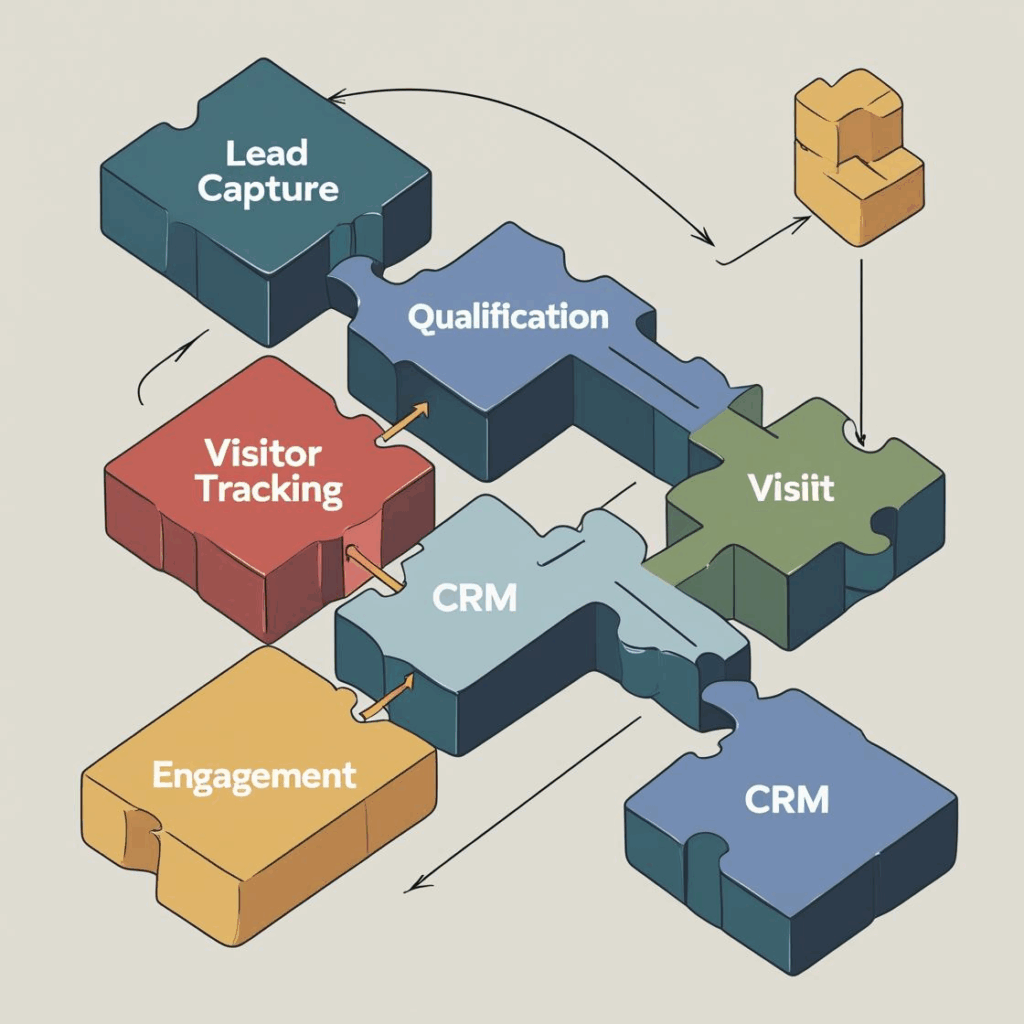
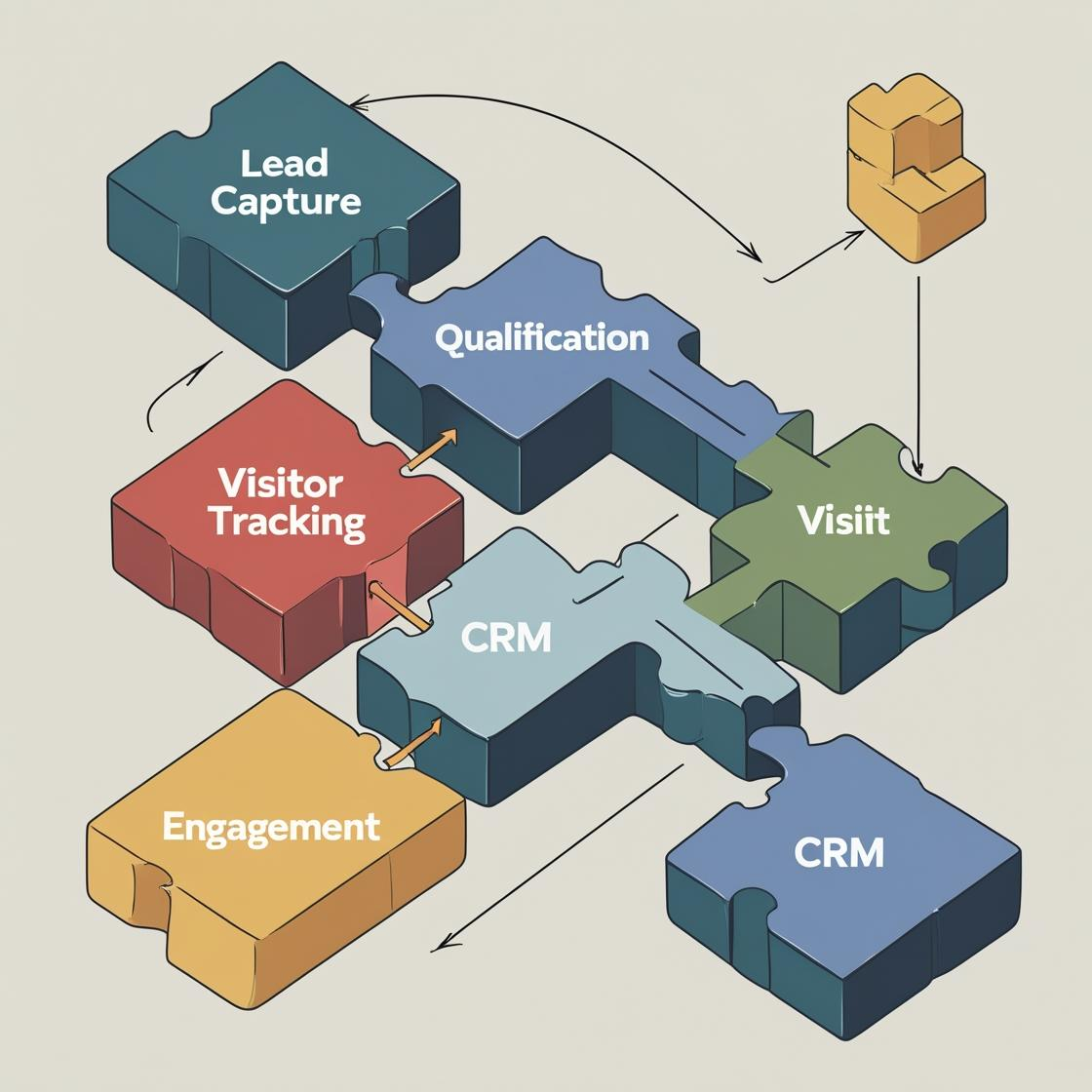
Many businesses today rely on multiple tools to manage different parts of their sales funnel, one tool for lead capture, another for qualification, a separate system for visitor tracking, and another for engagement. When these tools aren’t properly connected, they can create silos of data and disjointed buyer experiences. For example, a chatbot may capture an inquiry, but qualification data may not flow smoothly into the CRM; marketing automation can run separately while sales reps have limited context about the leads they’re contacting. The result can be gaps in the funnel, delayed follow-ups, inefficient processes, and potential buyers slipping away before meaningful engagement happens.
The Problem with Traditional Sales Tech Stacks
| Pain Point | Traditional Stack | Unified AI Platform |
| Data Silos | Info spread across CRM, chat, booking, email, analytics tools | All customer data centralized and enriched in real-time |
| Manual Handoffs | SDRs waste time copying/pasting lead data | Automated lead qualification and routing |
| Disconnected UX | Visitors get different experiences across channels | Consistent, personalized journey across touchpoints |
| Cost Inefficiency | Paying for 5+ tools with overlapping features | One integrated solution reduces tech bloat & spend |
| Lost Deals | Leads drop off in fragmented workflows | Full-funnel orchestration retains and converts more |
Sales teams often rely on different tools for different jobs: CRMs for customer information, chatbots for interaction, schedulers for meetings, and email tools for follow-up. When these systems don’t integrate effectively, teams can face inefficiency, limited lead visibility, fragmented workflows, and a more complicated sales process.

The New Solution: Unified AI Sales Platforms
Unified AI sales platforms aim to go beyond solving individual pain points. They can connect multiple parts of the sales journey by combining capabilities such as:
- Real-time Visitor Intelligence
- AI-Powered Lead Qualification
- Omnichannel Communication (chat, audio, video)
- Human-AI Handover Flows
- Workflow Automation and CRM Sync
- Analytics & Lead Insights
These platforms can create a more connected environment for marketing and sales teams, bringing multiple engagement and workflow capabilities together.
Feature Breakdown: What Makes an AI Sales Platform Truly Unified?
| Feature | Description | Knock Knock App in Action |
| Live Tracking | Understand visitor behavior in real-time | Instantly sees which page visitors are on, how long they stay, and what they interact with |
| Lead Intelligence | Enrich anonymous visitor data into useful profiles | Identifies company, engagement history, buying signals |
| AI Agent | Smart, context-aware text and voice conversations | Converses using real-time data, not isolated scripts |
| Human Handoff | Seamless switch to sales rep when needed | AI books call or instantly connects to rep via video |
| Unified Data Layer | Centralized view of all interactions | One timeline from first touch to closed deal |
| Workflow Automation | Auto tasks, emails, CRM updates | Replaces 5+ manual tasks per rep per lead |
| Predictive Analytics | Suggests actions, forecasts conversions | Shows hot leads, churn risks, likely next Steps |
Why This Matters Now: AI is Maturing
While the market is flooded with point AI solutions, the platforms that stand out are those built natively for AI. These aren’t just chatbots with fancy skins. They are deep-tech platforms designed to act on live data, engage intelligently, and convert at scale.
This matters more than ever because:
- Buyers expect instant, personalized experiences
- Sales teams are burnt out from tool overload
- Businesses need to do more with fewer people
Unified AI platforms solve all three.
Case-in-Point: Knock Knock App
The Knock Knock App is built around the exact principles of AI-native unification. Here’s how it supports full-funnel conversion:
- First Contact: Visitor arrives on site, Knock Knock App begins live tracking
- Contextual Engagement: AI engages with visitor based on behavior & profile
- Smart Qualification: AI qualifies and captures lead info
- Instant Handoff: High-intent visitors routed to real-time video call with sales
- CRM Sync: Data, notes, timeline auto-updated in CRM
- Follow-Up & Forecasting: Predictive engine guides next steps
It replaces multiple tools (chatbot, meeting scheduler, screen recorder, lead enrichment, CRM plugin) with a single elegant flow.
Summary Table: Knock Knock App vs Traditional Stack
| Capability | Traditional Tools | Knock Knock App |
|---|---|---|
| Visitor Identification | Often centered on traffic and analytics data | Lead intelligence using available visitor signals |
| Engagement | May rely on standalone chat tools | AI conversations informed by available context |
| Qualification | Forms, reps, or separate qualification tools | AI-assisted qualification in real-time |
| Handoff | May require separate scheduling or communication steps | Supports direct human interaction, including live video |
| Conversion Support | Teams may move between multiple tools | Connected engagement, lead insights, and CRM sync |
Final Thoughts: AI + Human = The Future
The future of sales doesn’t have to be AI-only or human-only. AI can support qualification, engagement, repetitive workflows, and lead prioritization, while humans bring judgment, empathy, trust, and experience to important conversations.
Unified AI sales platforms like Knock Knock App are designed to bring those capabilities closer together.
So, if your current tech stack feels like a puzzle with disconnected pieces, it may be worth exploring a platform that brings more of your visitor engagement, qualification, human interaction, and sales workflows into one connected experience.

Anna Hyatt
Co-Founder | Knock Knock App
AI × Human Touch = Happier Clients, More Revenue
LinkedIn Profile


